
Master Thesis - Uncertainty-Aware Modeling for Geo-Foundation Models
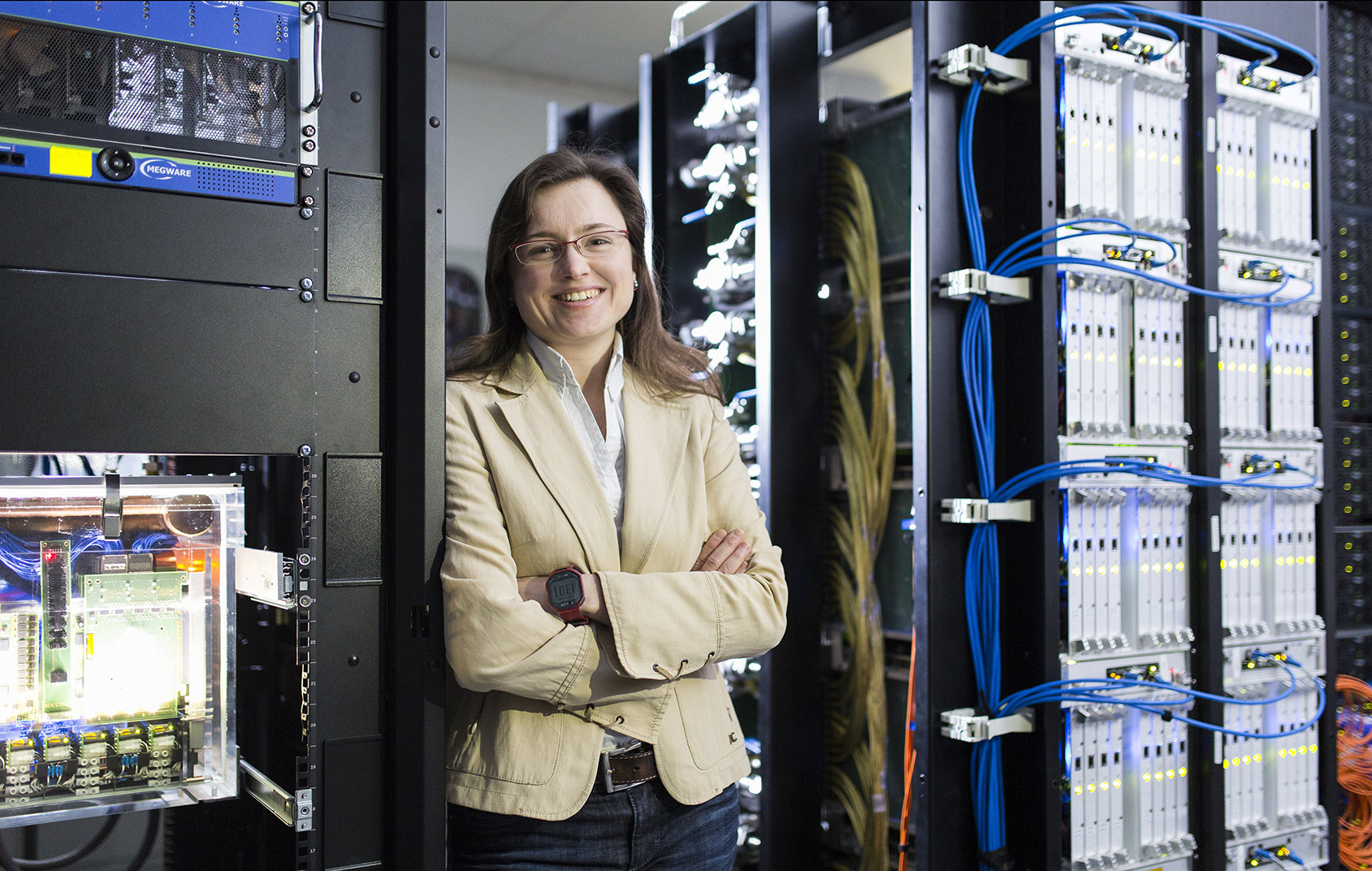
Earth observation is key to tackling global challenges such as sustainable agriculture, climate change, and environmental monitoring. With your contribution, you will help developing the next generation of AI foundation models, enabling more accurate and reliable Earth observation applications with real-world research and societal impact. Join us now at the Jülich Supercomputing Centre (JSC).
Your Job
In this thesis you will work in the European Space Agency (ESA)-funded project Fast-EO (Fostering Advances in Foundation Models via Unsupervised and Self-Supervised Learning for Downstream Tasks in Earth Observation).
You will actively work on integrating uncertainty-aware modeling capabilities into Geo-Foundation Models (GeoFMs). GeoFMs are typically pretrained on large-scale datasets using self-supervised learning, enabling them to learn general-purpose representations that transfer effectively across a wide range of EO tasks. Effectively used, GeoFMs serve a variety of downstream tasks in Earth Observation (EO), such as forest monitoring, flood detection, biomass estimation, or crop yield prediction. However, GeoFMs commonly cannot estimate the uncertainty associated with a prediction.
In this thesis, you will focus on the quantification of model uncertainty, that arises from limited knowledge and the quantification of data uncertainty, that arises from data-inherent variability. For this, you can include stochastic forward passes or measure latent variability. Finally, you should enable robust out-of-distribution detection vial well-calibrated uncertainty estimates.
Your Profile
- Currently pursuing a master’s degree in Computer Science, Data Science, Artificial Intelligence, Geosciences, Physics, or a related field
- Strong programming skills in Python and experience with deep learning frameworks such as PyTorch, TensorFlow, or scikit-learn
- Experience with stochastic Machine Learning and uncertainty quantification
- Experience with multimodal and/or multitemporal data. Experience with Earth observation is an advantage
- Experience working on High-Performance Computing (HPC) systems, including batch scheduling and Slurm
- The ability to work effectively in an interdisciplinary team
- Well organized, reliable, proactive, and motivated to conduct independent research
- Very good command of written and spoken English with extensive vocabulary is required (at least B2 level according to the CEFR), ideally supported by a certificate confirming the language level
Our Benefits for You
We work on the very latest issues that impact our society and are offering you the chance to actively help in shaping the change! We support you in your work with:
- Impactful Research: Work on a cutting-edge, societally relevant research topic within an ESA-funded international project
- Practical relevance: With us, you will gain valuable practical experience alongside your studies and actively participate in interdisciplinary projects
- Excellent Scientific Environment: Collaborate with leading researchers from international research institutes, universities, public organizations, and industry partners.
- Access to World-Class Computing Resources: Conduct experiments on modern HPC infrastructure, including JUPITER, one of Europe's most powerful supercomputers.
- Work-life balance: We offer flexible working hours to help you balance your professional and personal life. You also have the option of flexible working (in terms of location), which is generally possible after consultation and in line with upcoming tasks and (on-site) appointments
- Fair remuneration: We will pay you a reasonable remuneration for your thesis
In addition to exciting tasks and a collegial working environment, we offer you much more: https://go.fzj.de/benefits
We welcome applications from people with diverse backgrounds, e.g. in terms of age, gender, disability, sexual orientation / identity, and social, ethnic and religious origin. A diverse and inclusive working environment with equal opportunities in which everyone can realize their potential is important to us.
The following links provide further information on diversity and equal opportunities: https://go.fzj.de/equality and on specific support options for women: https://go.fzj.de/womens-job-journey

Follow us