
PhD position – Understanding the chemical activity of air pollutants in field measurements using laser spectroscopy
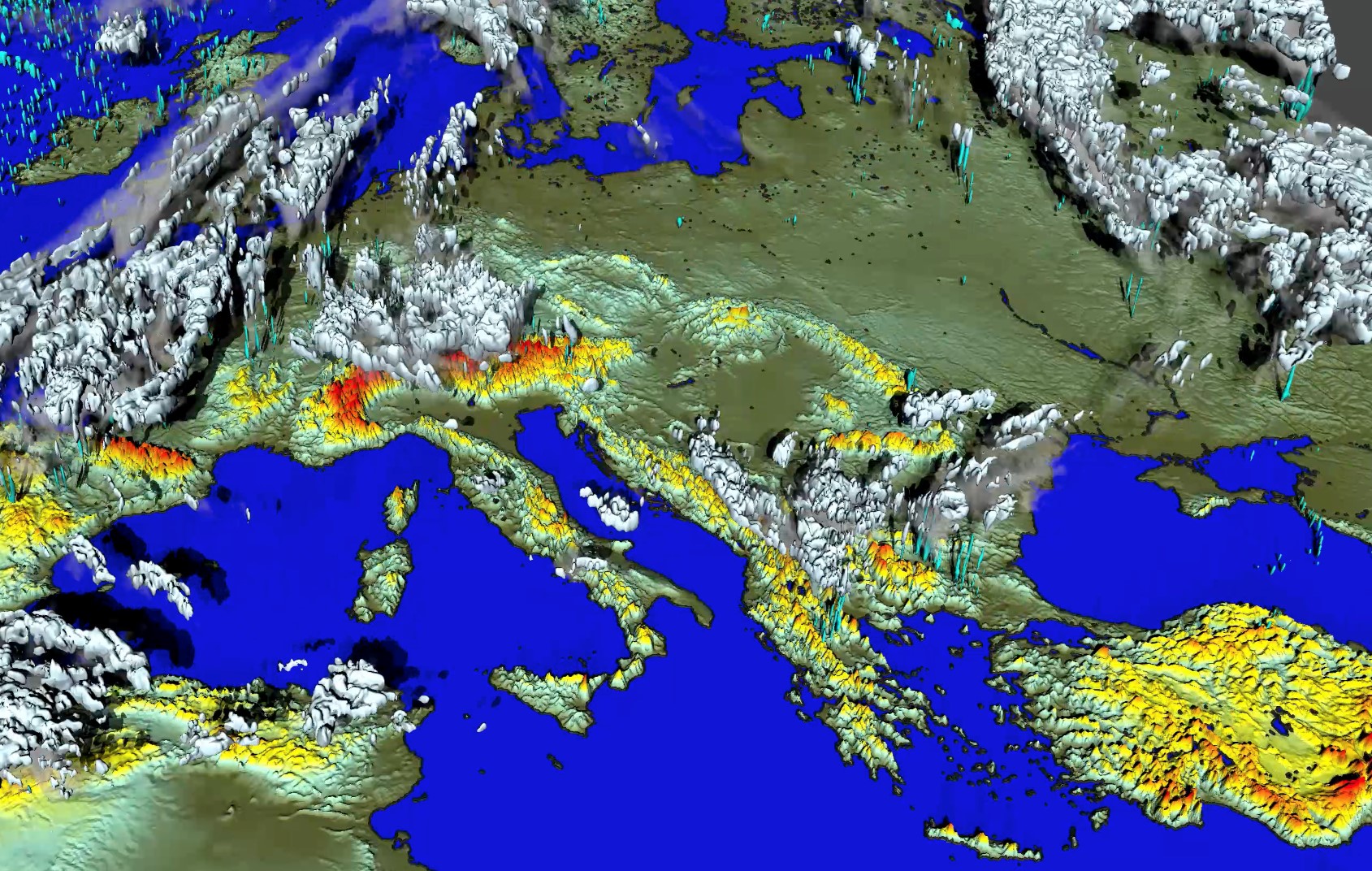
Human activities—particularly increasing energy production and consumption, but also natural processes—release large quantities of trace substances, thereby influencing the composition of the atmosphere and the climate.
Since the beginning of industrialization in the 19th century, the chemical composition of the air has changed significantly and today contains substantially higher levels of trace substances. This has two important consequences for the Earth system and human society: On the one hand, trace substances influence the Earth’s radiation balance and climate; on the other hand, higher levels of pollution—particularly in the world’s industrialized countries and megacities—lead to health impacts, damage to ecosystems, and crop losses.
At the Institute of Climate and Energy Systems - Troposphäre (ICE-3) we investigate the chemistry and transport of trace substances in the troposphere. To this end, field and simulation chamber experiments as well as model simulations are conducted.
Your Job
The current transition of energy production from combustion to renewables sources, is changing the emissions of air pollutants from anthropogenic activities. While this shift is expected to improve air quality overall, many regions worldwide still struggle to meet acceptable standards. One challenge of predicting the effect of emission reductions is the strong non-linear connection between emitted species and the photochemically formed secondary air pollutants such as ozone and particulate matter. Secondly, a very large number of different hydrocarbons are emitted which makes their inclusion on air quality model difficult.
You will join a team that has developed a unique laser-spectroscopy method, which measures the total reactivity of pollutants using laser spectroscopy methods. In the project, this custom-built instrument will measure in national and international field campaigns. The goal of this project is to explore how this measurement can improve air quality predications by connecting the total reactivity measurement to measurements of single compounds and secondary pollutants.
Your tasks in detail:
- Measure the total reactivity of pollutants in field campaigns
- Evaluate and analyse data to understand the measured air composition
- Improve ozone pollution predictions using total reactivity measurements
- Publish your results in international journals and present them at conferences
Your Profile
We are looking for someone who combines scientific curiosity with hands-on measurement skills:
- Master’s degree in chemistry, physics or environmental sciences, or related field
- Strong motivation for an interdisciplinary project in atmospheric chemistry and to work with custom-built laser spectroscopy instrumentation
- Experience in data analysis using mathematical script languages or Python
- Excellent teamwork and communication skills
- Very good command of written and spoken English with extensive vocabulary is required (at least B2 level according to the CEFR), ideally supported by a certificate confirming the language level.
Our Benefits for You
We work on the very latest issues that impact our society and are offering you the chance to actively help in shaping the change! We support you in your work with:
- Team & Environment: You will work in a motivated team with an international and interdisciplinary focus – at one of the largest research institutions in Europe
- Research & Infrastructure: You will have access to excellent scientific and technical facilities for your work
- Networking & Exchange: You will participate in (international) conferences and project meetings and actively build your scientific network
- Supervision & Support: We will accompany your doctoral studies with continuous, expert guidance from your academic supervisor
- Work-life balance: We offer flexible working hours to help you balance your professional and personal life. You also have the option of flexible working (in terms of location), which is generally possible after consultation and in line with upcoming tasks and (on-site) appointments
- Annual Leave: You get 30 days of annual leave
- Knowledge & Development: Your professional development is important to us – we support you specifically and individually e.g., through training and networking opportunities specifically for doctoral candidates (JuDocS)
- Health & well-being: Your health is important to us. You can look forward to a comprehensive company health management programme with a wide range of options, including a beach volleyball court, running groups, yoga classes and much more. In addition, our company medical service and an experienced social counselling team are available to assist you on site
- Campus experience: Our research campus in the countryside creates ideal conditions for collegial exchange and sporting activities right on site. Our cafeteria offers a wide range of options—you can enjoy a relaxing lunch break with a lake view
- Successful start: It is important to us that you quickly settle into the team and are given structured training for your tasks. We also support you from the very beginning and make your start easier with our Welcome Days and Welcome Guide
- Fair remuneration: Depending on your qualifications and assigned responsibilities, you will be classified according to pay group 13 (67,5%) of the TVöD-Bund.In addition to the basic salary, there is an additional year-end bonus under the collective pay agreement amounting to 75% of a monthly salary, as well as capital-forming benefits. All information about the TVöD-Bund collective agreement can be found on the BMI website (pay scale table on page 66 ff. of the PDF download)
- Contract: The employment of doctoral researchers at Jülich is governed by a doctoral contract, which usually has a term of three years.
- Support for international employees: Our International Advisory Service makes it easier for international employees to get started
In addition to exciting tasks and a collegial working environment, we offer you much more: https://go.fzj.de/benefits
We welcome applications from people with diverse backgrounds, e.g. in terms of age, gender, disability, sexual orientation / identity, and social, ethnic and religious origin. A diverse and inclusive working environment with equal opportunities in which everyone can realize their potential is important to us.
The following links provide further information on diversity and equal opportunities: https://go.fzj.de/equality and on specific support options for women: https://go.fzj.de/womens-job-journey
Index number: 2026D-0604

Follow us